
Define the pruning objective and identify branches that serve that objective
Define the pruning objective and identify branches that serve that objective.
Pruning for clearance, structure, safety, and long-term tree health across Newton’s mature residential canopy.
Pruning should solve a defined problem. On Newton’s tree-lined residential streets, that may mean shortening an overextended limb above a roof, clearing branches from a driveway or walkway, reducing deadwood, improving young-tree structure, or selectively reducing weight without stripping the canopy. Mature shade trees respond very differently from shrubs, so the objective, cut placement, season, and amount of live tissue removed all matter.
Newton properties often combine mature trees with finished landscaping, roofs, garages, utility lines, stone walls, narrow drives, and neighboring yards. Those details affect how the work can be performed and whether the best recommendation is immediate work, phased work, monitoring, or a different service entirely.
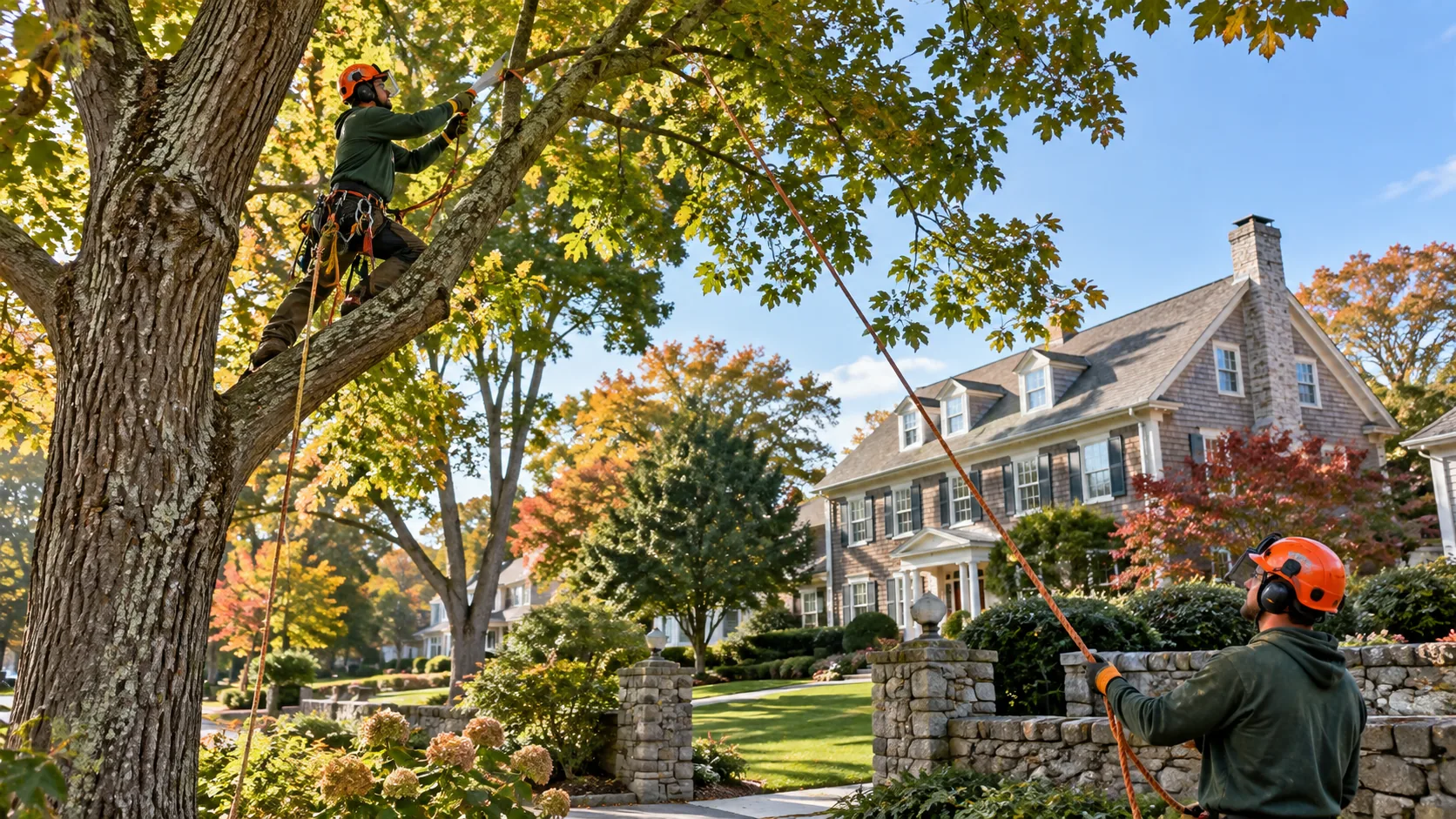
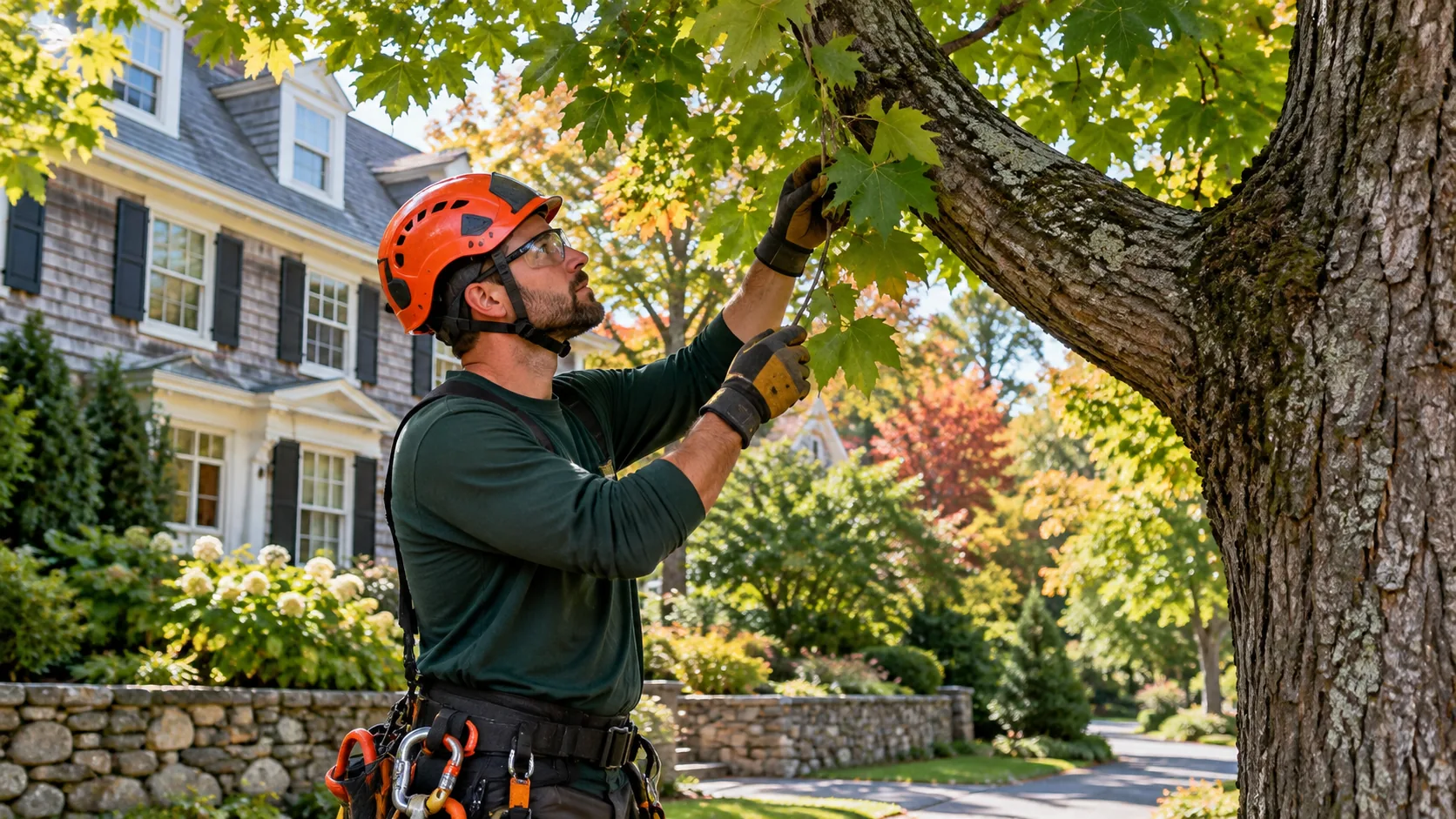
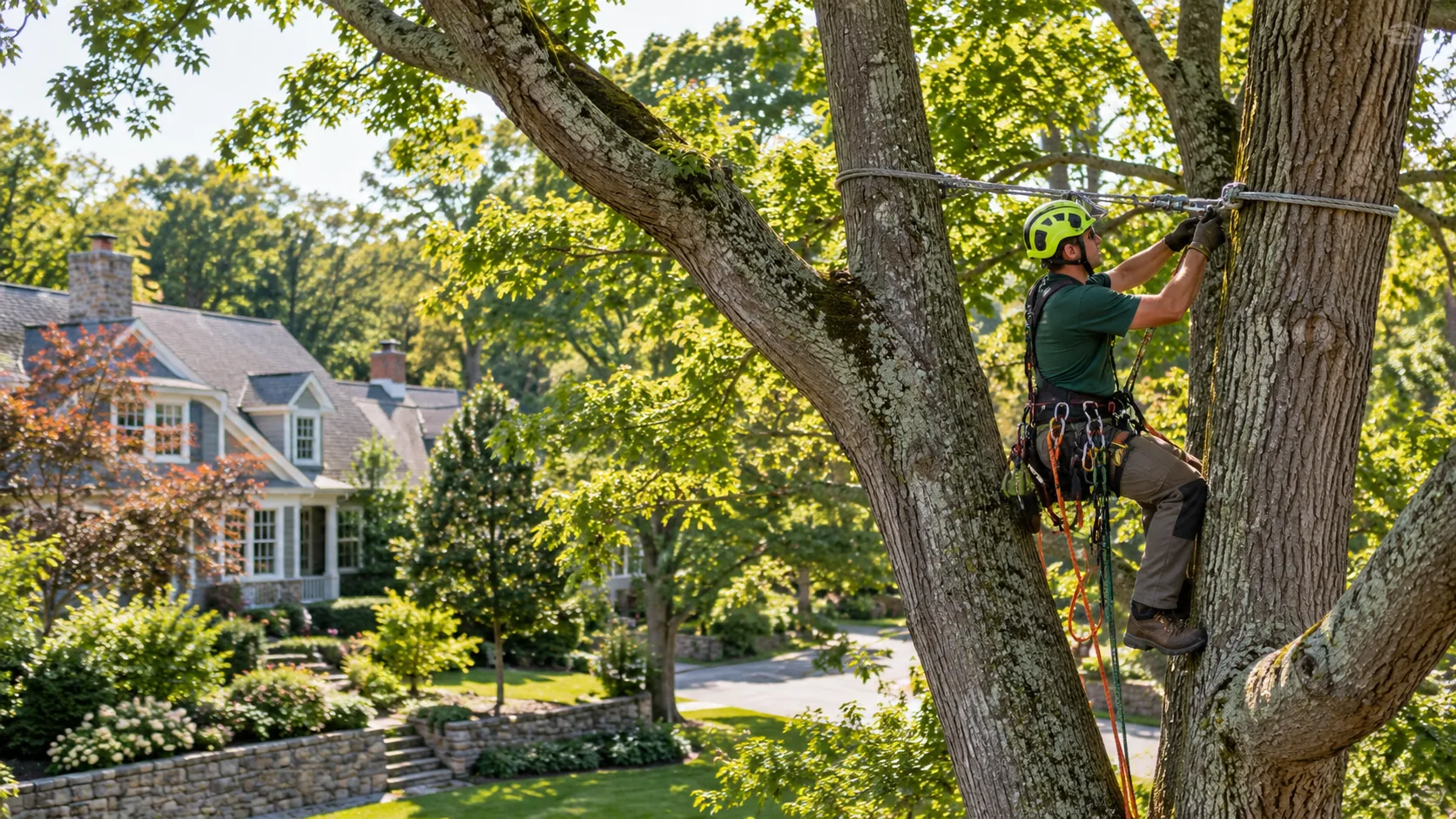
A pruning estimate should begin with the purpose of the work. The crew needs to understand whether the objective is clearance, deadwood removal, structural correction, risk reduction, restoration after storm damage, or routine maintenance. Tree species, age, vigor, previous cuts, branch diameter, decay, nesting activity, nearby utility conductors, and access all affect what should be removed and what should stay. Good pruning is selective. Topping, indiscriminate shearing, and removing excessive live canopy can create weak sprouts, sun exposure, decay, and long-term maintenance problems.
The estimate should state the practical scope clearly enough that the homeowner can compare options. That includes what tree or trees are included, the type of work, cleanup, wood handling, stump work when relevant, and any assumptions about access. If conditions change once hidden decay, buried obstacles, or other unknowns are discovered, those changes should be explained rather than quietly folded into vague language.
Define the pruning objective and identify branches that serve that objective.
Inspect the tree for defects, decay, previous topping, pests, or conditions that may change the scope.
Establish climbing, bucket, rigging, and ground-control zones.
Make selective cuts that preserve natural form and adequate live canopy.
Remove debris and review any future maintenance or monitoring needs.
Every site is different. The sequence can change for utility conflicts, emergency conditions, municipal requirements, crane access, construction coordination, or other conditions that affect safety and scope.
Newton’s Tree Preservation Ordinance requires a permit before removal of private trees six inches DBH or larger. Exterior construction can also require a tree permit even when the project does not include tree removal. The City has separate construction, non-construction, and qualifying exemption processes, plus documentation and tree-protection requirements in certain situations.
That ordinance is most directly relevant to removal and construction, but it also affects broader tree-care planning. A pruning plan should not be used as a disguised removal. A construction project should protect trees that are supposed to remain. When a homeowner is deciding between preservation and removal, permit requirements can be part of the practical decision.
Read the Newton tree permit guide →The City reports more than 20,000 street trees and says maples account for about 80% of that public inventory. Many private properties contain additional mature hardwoods and ornamentals. The result is a market where mature-tree maintenance, storm response, and preservation decisions are not niche concerns.
Typical Boston-area pricing shows a very broad trimming range because the phrase covers everything from a few reachable limbs to large-canopy work requiring climbing or a bucket. Height, branch diameter, access, number of trees, clearance targets, rigging, cleanup, and the amount of technical climbing are major price drivers. Bundling several trees in one visit can sometimes be more efficient than scheduling repeated small trips, especially when a chipper and crew are already mobilized.
Height, trunk and branch diameter, species, condition, defects, lean, canopy spread, and the amount of material being handled.
Driveways, gates, slope, turf protection, walls, roofs, utilities, neighboring property, street access, parking, and room for equipment.
Rigging, climbing, bucket or crane use, cleanup, log handling, stump work, urgency, permits, and whether several tasks can be completed in one mobilization.
For broader budgeting guidance, see the Newton-area tree service cost guide. Typical ranges are planning tools, not guaranteed prices.
Careful removal planning for dead, declining, storm-damaged, crowded, or poorly placed trees on Newton properties.
Learn more →Related servicePriority response for fallen trees, split limbs, blocked access, and storm-damaged trees where conditions allow safe work.
Learn more →Related serviceMechanical stump grinding for old removals, trip hazards, replanting plans, and yards that need a cleaner finish.
Learn more →People use the terms interchangeably, but professional pruning is more precise: cuts are selected for a specific objective such as clearance, structure, deadwood removal, or risk reduction.
Topping is generally a poor pruning practice. It removes large amounts of canopy and often produces weakly attached sprouts and decay. Selective reduction is a different technique.
Usually, yes, but the amount and location of clearance should be chosen without unbalancing the canopy or making unnecessary large cuts.
There is no universal schedule. Species, age, site conditions, storm history, clearance needs, and previous pruning all affect the interval.
Get a site-specific estimate instead of relying on a generic range.