
Measure the stump and inspect access from the street to the work area
Measure the stump and inspect access from the street to the work area.
Mechanical stump grinding for old removals, trip hazards, replanting plans, and yards that need a cleaner finish.
A stump can be left after removal, but it is rarely invisible. It affects mowing, planting, grading, walkways, new construction, and how easily a yard can be used. Stump grinding uses a cutting wheel to reduce the visible stump and major surface wood below grade. It is usually less disruptive than excavating an entire root system, but depth and cleanup should be matched to what you plan to do with the area next.
Newton properties often combine mature trees with finished landscaping, roofs, garages, utility lines, stone walls, narrow drives, and neighboring yards. Those details affect how the work can be performed and whether the best recommendation is immediate work, phased work, monitoring, or a different service entirely.
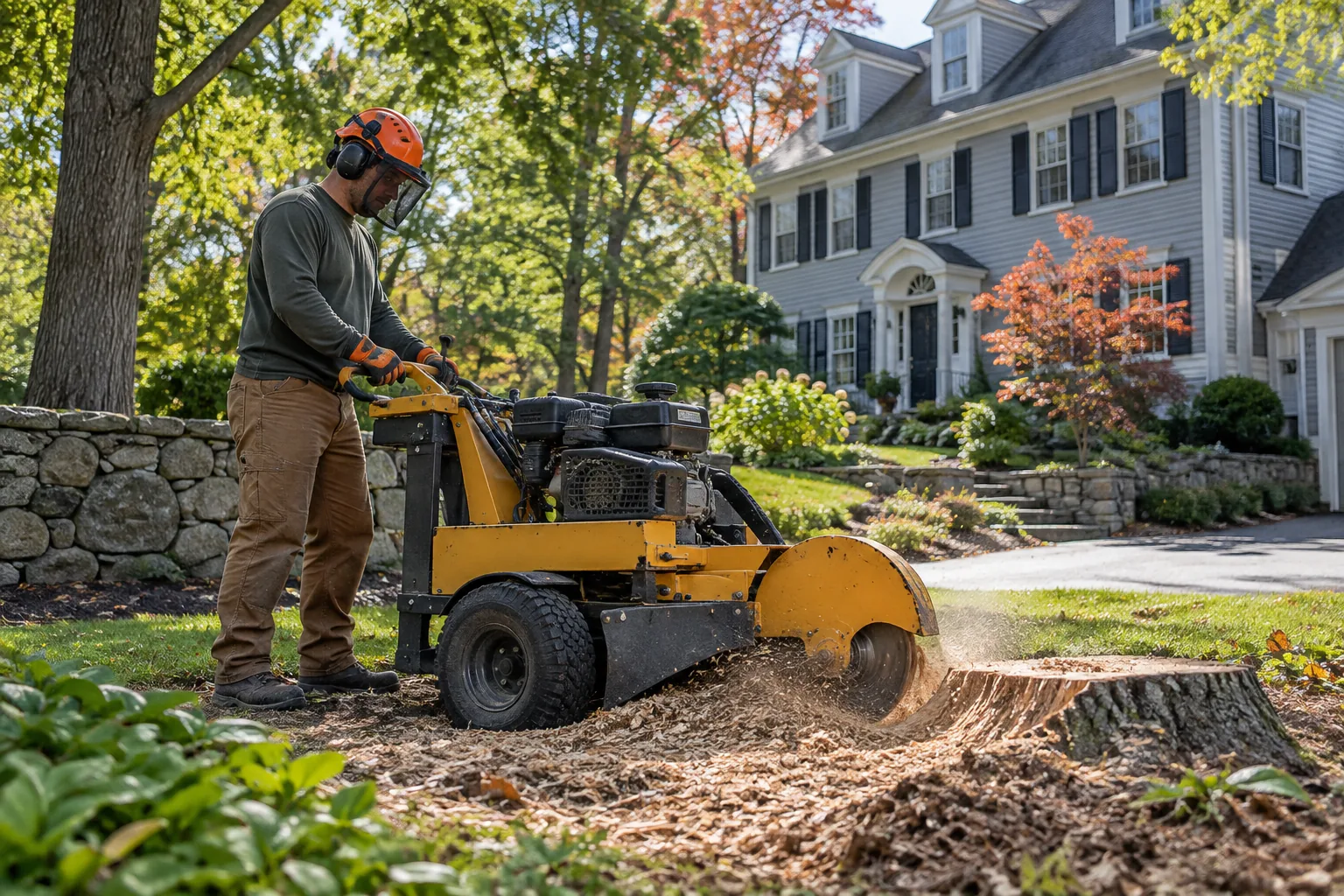
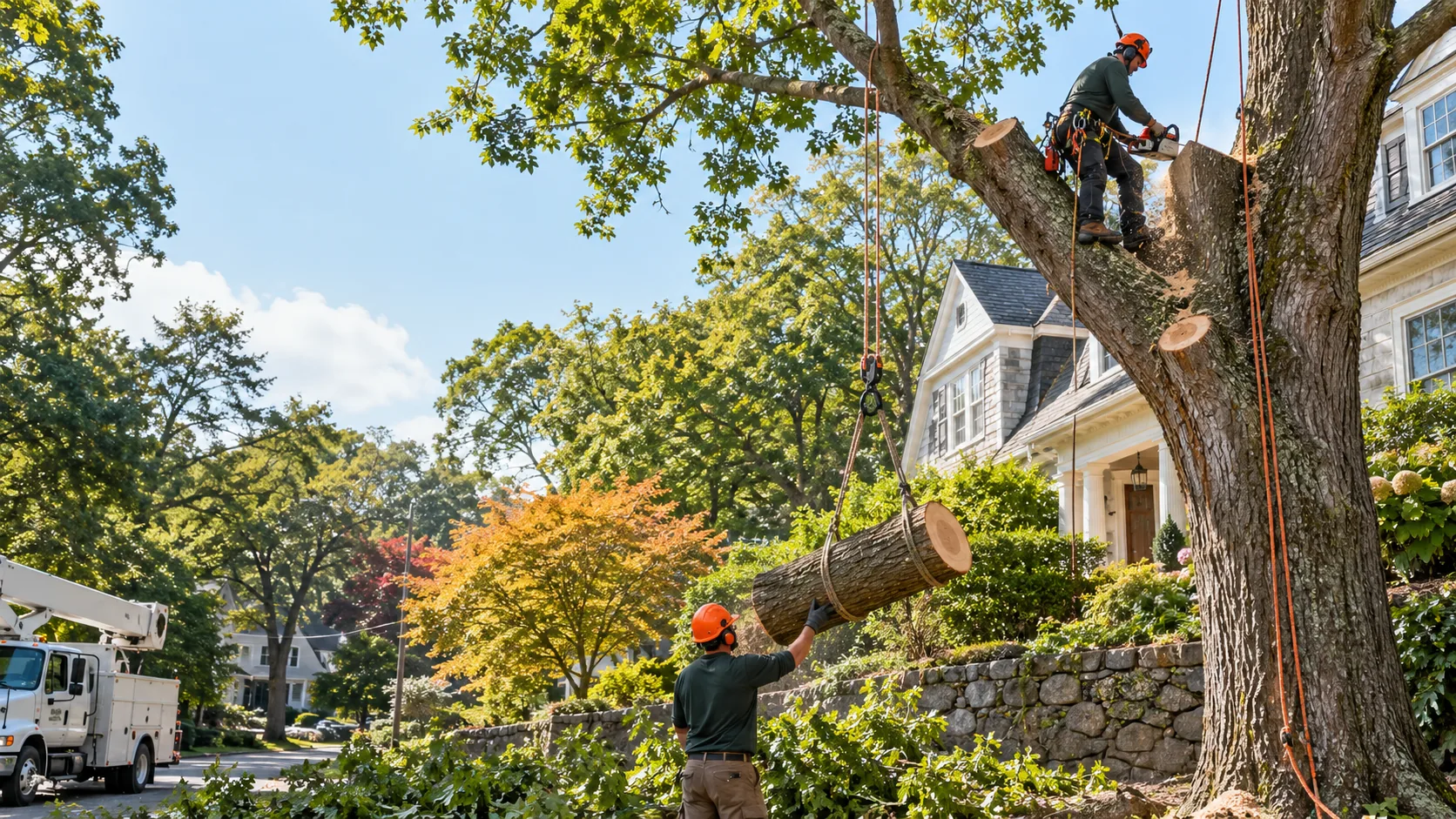
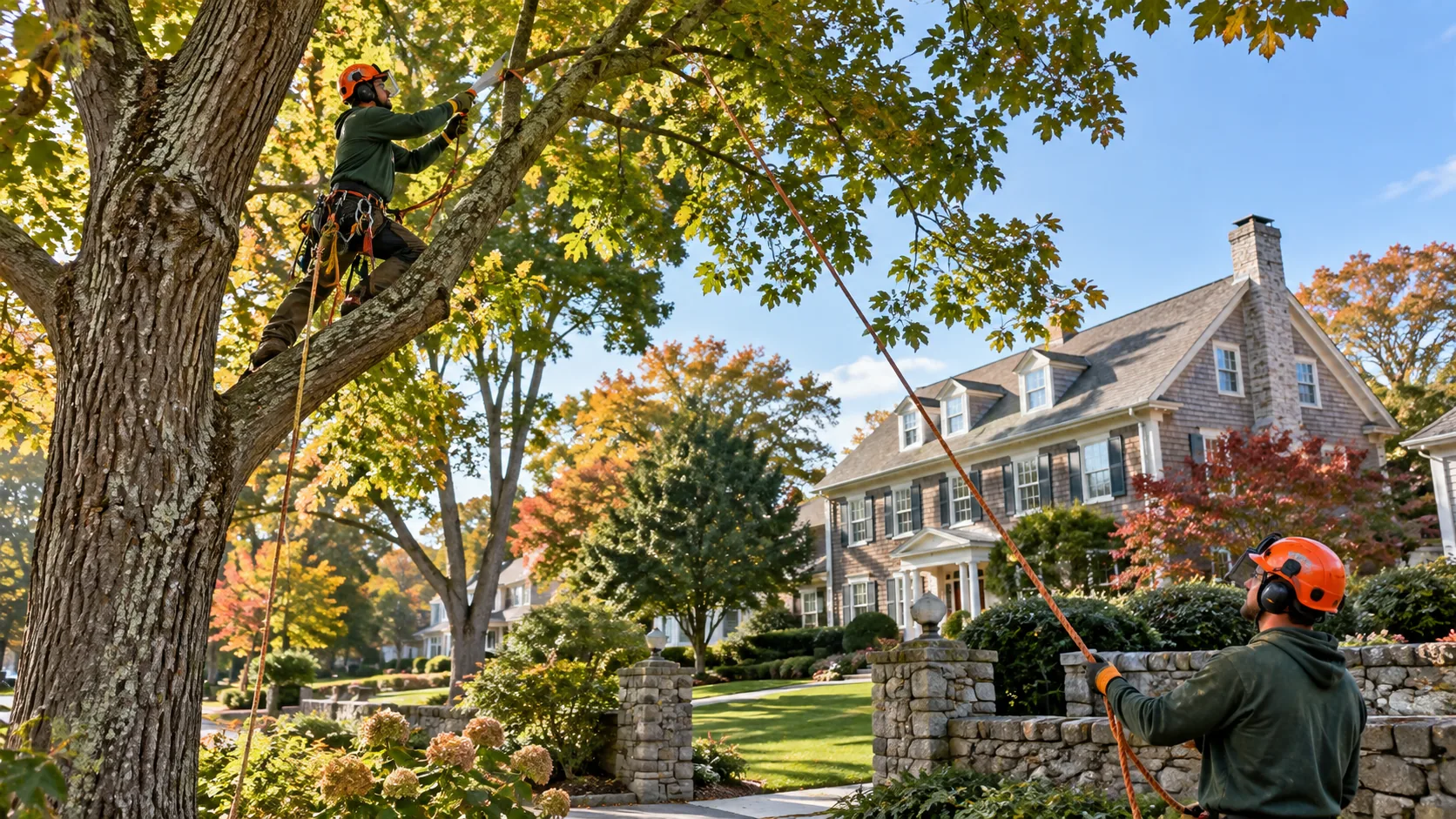
Access is the first practical question. Stump grinders come in different sizes, and gates, steps, slopes, walls, narrow side yards, irrigation, buried utilities, and nearby masonry can determine which machine can reach the stump. The estimate should also clarify stump diameter, height, desired depth, visible surface roots, whether chips will be left or hauled, whether the hole will be backfilled, and what the homeowner plans to put there afterward. Grinding does not remove every underground root; roots generally remain and decay over time.
The estimate should state the practical scope clearly enough that the homeowner can compare options. That includes what tree or trees are included, the type of work, cleanup, wood handling, stump work when relevant, and any assumptions about access. If conditions change once hidden decay, buried obstacles, or other unknowns are discovered, those changes should be explained rather than quietly folded into vague language.
Measure the stump and inspect access from the street to the work area.
Identify nearby utilities, irrigation, hardscape, fencing, and other obstacles.
Set the grinding depth and cleanup plan based on future use of the area.
Grind the stump and agreed surface roots while controlling debris.
Rake or remove chips, backfill where included, and leave the area ready for the next landscape step.
Every site is different. The sequence can change for utility conflicts, emergency conditions, municipal requirements, crane access, construction coordination, or other conditions that affect safety and scope.
Newton’s Tree Preservation Ordinance requires a permit before removal of private trees six inches DBH or larger. Exterior construction can also require a tree permit even when the project does not include tree removal. The City has separate construction, non-construction, and qualifying exemption processes, plus documentation and tree-protection requirements in certain situations.
That ordinance is most directly relevant to removal and construction, but it also affects broader tree-care planning. A pruning plan should not be used as a disguised removal. A construction project should protect trees that are supposed to remain. When a homeowner is deciding between preservation and removal, permit requirements can be part of the practical decision.
Read the Newton tree permit guide →The City reports more than 20,000 street trees and says maples account for about 80% of that public inventory. Many private properties contain additional mature hardwoods and ornamentals. The result is a market where mature-tree maintenance, storm response, and preservation decisions are not niche concerns.
Typical Boston-area ranges place many stump-grinding jobs in the low hundreds, with larger diameters, difficult access, deep grinding, multiple stumps, surface roots, and chip hauling increasing the total. Mobilization matters, so several stumps at one property can have a different per-stump economics than one small stump. If a new foundation, utility trench, or other excavation is planned, grinding may not provide the same result as full root-ball excavation, so the end use should be discussed before the work is priced.
Height, trunk and branch diameter, species, condition, defects, lean, canopy spread, and the amount of material being handled.
Driveways, gates, slope, turf protection, walls, roofs, utilities, neighboring property, street access, parking, and room for equipment.
Rigging, climbing, bucket or crane use, cleanup, log handling, stump work, urgency, permits, and whether several tasks can be completed in one mobilization.
For broader budgeting guidance, see the Newton-area tree service cost guide. Typical ranges are planning tools, not guaranteed prices.
Careful removal planning for dead, declining, storm-damaged, crowded, or poorly placed trees on Newton properties.
Learn more →Related servicePruning for clearance, structure, safety, and long-term tree health across Newton’s mature residential canopy.
Learn more →Related servicePriority response for fallen trees, split limbs, blocked access, and storm-damaged trees where conditions allow safe work.
Learn more →Depth varies by machine, stump, roots, utilities, and what you plan to do with the site. The required depth should be agreed before work starts.
No. Grinding typically removes the stump and accessible surface wood, while much of the root system remains underground and decays naturally.
Usually, after excess chips are removed or mixed appropriately and the depression is filled with suitable soil. Fresh wood chips alone are not an ideal seed bed.
Often, but clearance, hidden metal, stones, utilities, and machine access can limit how close equipment can safely work.
Get a site-specific estimate instead of relying on a generic range.