
Walk the property with the decision-maker and identify operational constraints
Walk the property with the decision-maker and identify operational constraints.
Planned tree care for multifamily, institutional, office, retail, and managed properties in Newton and nearby communities.
Commercial tree work is less about one isolated tree and more about managing an entire property responsibly. Property managers need safe access, predictable scheduling, clear scope, debris control, communication around tenants or visitors, and a record of what was inspected or completed. Campuses and multifamily properties may have dozens of trees with different priorities, from routine clearance to urgent risk concerns.
Newton properties often combine mature trees with finished landscaping, roofs, garages, utility lines, stone walls, narrow drives, and neighboring yards. Those details affect how the work can be performed and whether the best recommendation is immediate work, phased work, monitoring, or a different service entirely.
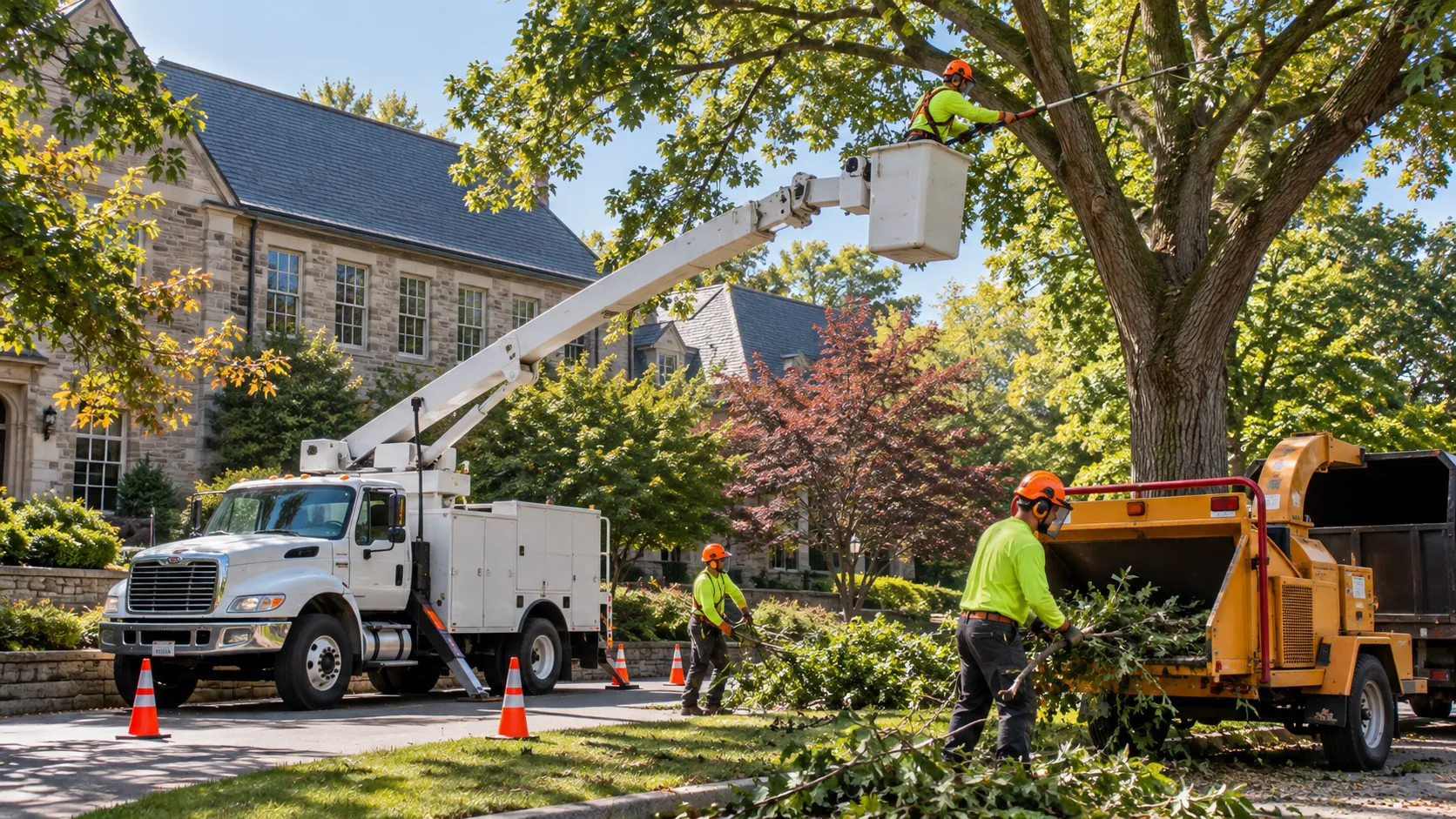
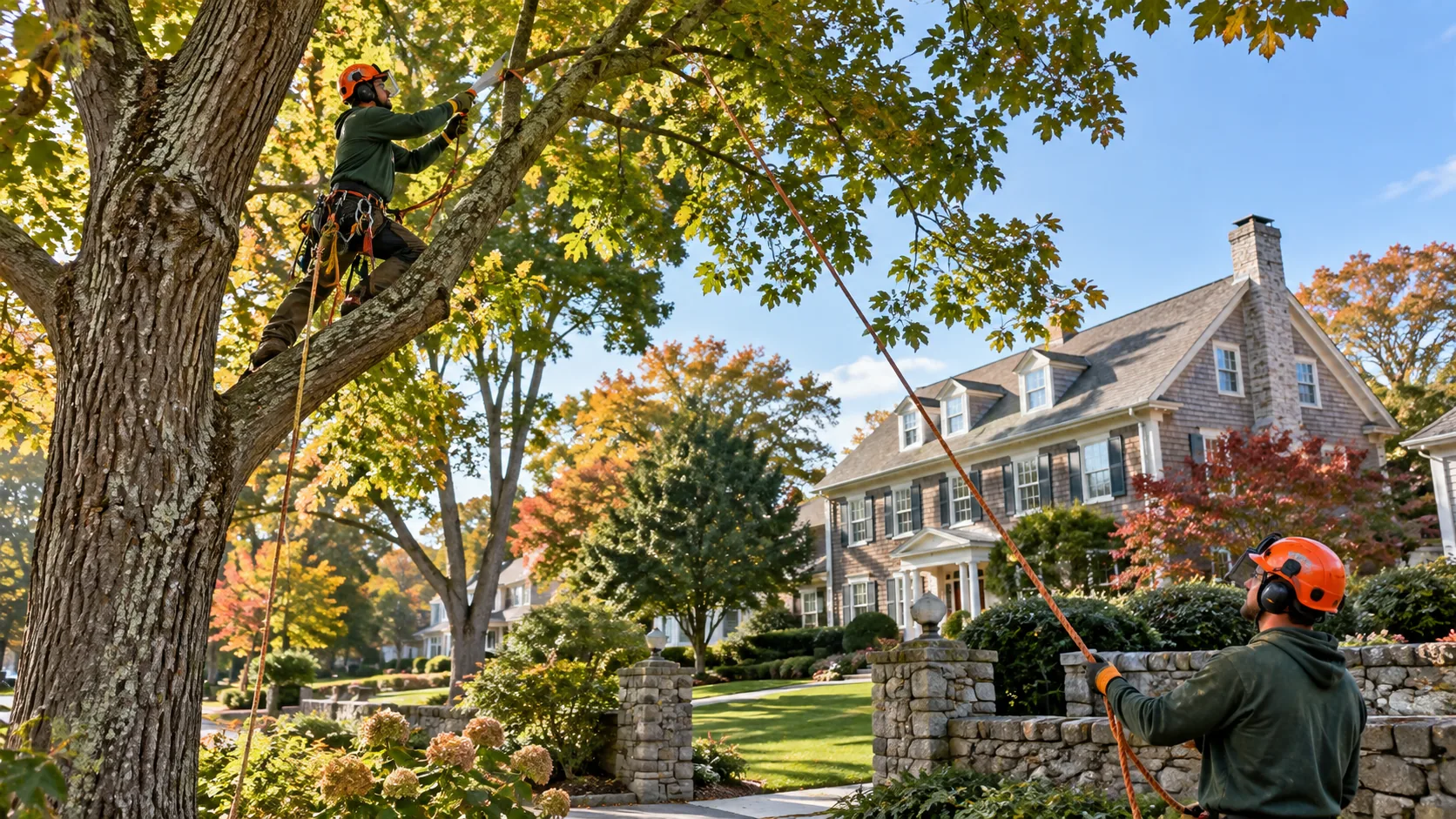
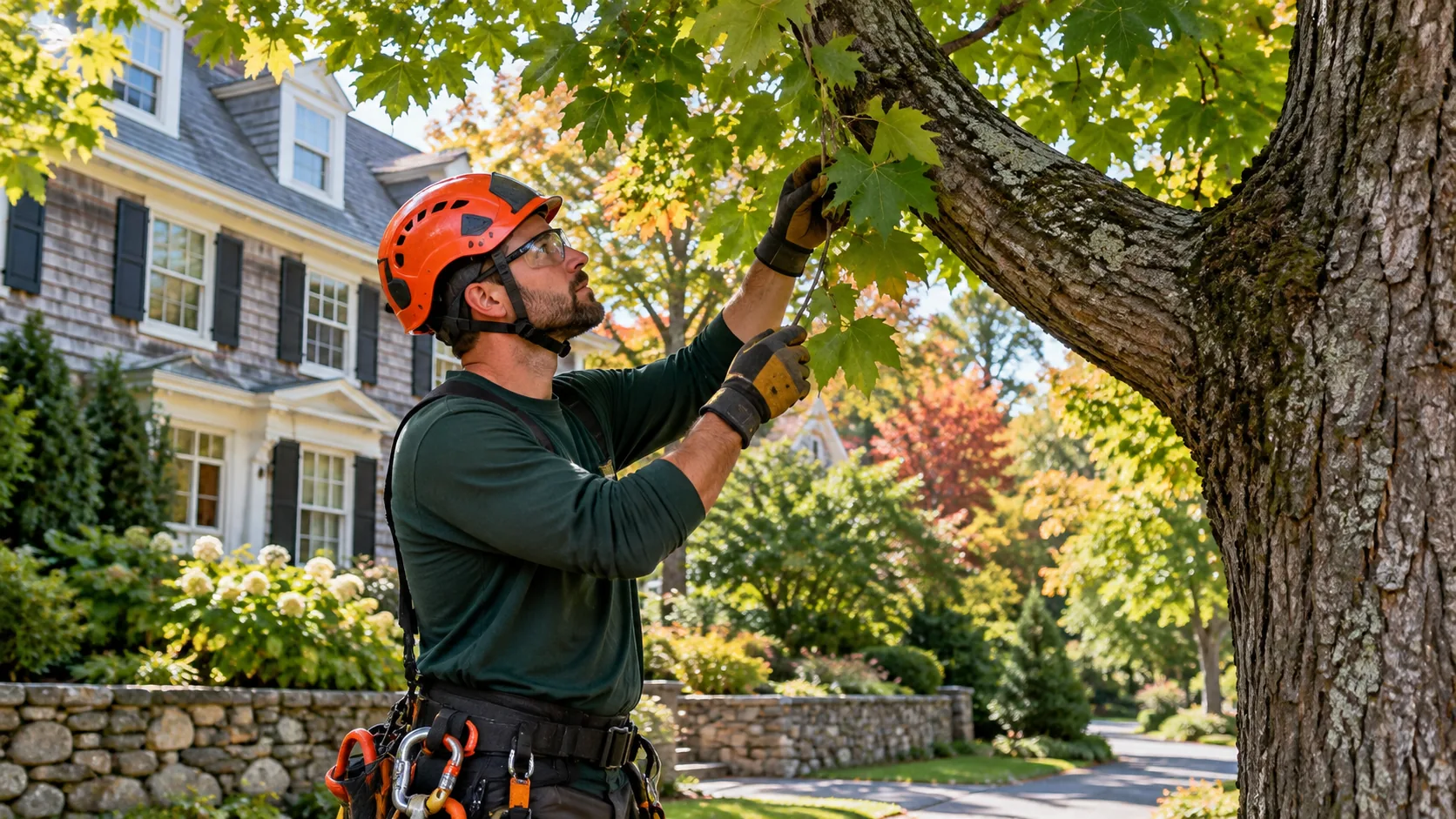
Commercial work should begin with site use. A branch over a rarely used wooded edge and the same branch over a school entrance have different exposure. The plan should account for pedestrian and vehicle traffic, work-hour restrictions, parking control, loading zones, emergency access, noise, neighboring properties, overhead utilities, and how debris will move through the site. In Newton, tree-permit and construction-protection requirements may also matter when exterior work is planned.
The estimate should state the practical scope clearly enough that the homeowner can compare options. That includes what tree or trees are included, the type of work, cleanup, wood handling, stump work when relevant, and any assumptions about access. If conditions change once hidden decay, buried obstacles, or other unknowns are discovered, those changes should be explained rather than quietly folded into vague language.
Walk the property with the decision-maker and identify operational constraints.
Prioritize immediate hazards, near-term maintenance, and lower-priority work.
Group compatible work to reduce repeated mobilization and disruption.
Coordinate access, cones, temporary closures, equipment, and communication with occupants.
Complete work, cleanup, and any requested documentation or future maintenance notes.
Every site is different. The sequence can change for utility conflicts, emergency conditions, municipal requirements, crane access, construction coordination, or other conditions that affect safety and scope.
Newton’s Tree Preservation Ordinance requires a permit before removal of private trees six inches DBH or larger. Exterior construction can also require a tree permit even when the project does not include tree removal. The City has separate construction, non-construction, and qualifying exemption processes, plus documentation and tree-protection requirements in certain situations.
That ordinance is most directly relevant to removal and construction, but it also affects broader tree-care planning. A pruning plan should not be used as a disguised removal. A construction project should protect trees that are supposed to remain. When a homeowner is deciding between preservation and removal, permit requirements can be part of the practical decision.
Read the Newton tree permit guide →The City reports more than 20,000 street trees and says maples account for about 80% of that public inventory. Many private properties contain additional mature hardwoods and ornamentals. The result is a market where mature-tree maintenance, storm response, and preservation decisions are not niche concerns.
Commercial pricing depends on scope, number and size of trees, equipment, traffic or pedestrian control, disposal, work-hour restrictions, and whether multiple visits are required. A phased program can be useful when a property has many needs but no reason to perform everything at once. Clear line items help managers compare urgent risk work, routine pruning, removals, stump work, and longer-term tree-health tasks without blending them into one opaque number.
Height, trunk and branch diameter, species, condition, defects, lean, canopy spread, and the amount of material being handled.
Driveways, gates, slope, turf protection, walls, roofs, utilities, neighboring property, street access, parking, and room for equipment.
Rigging, climbing, bucket or crane use, cleanup, log handling, stump work, urgency, permits, and whether several tasks can be completed in one mobilization.
For broader budgeting guidance, see the Newton-area tree service cost guide. Typical ranges are planning tools, not guaranteed prices.
Careful removal planning for dead, declining, storm-damaged, crowded, or poorly placed trees on Newton properties.
Learn more →Related servicePruning for clearance, structure, safety, and long-term tree health across Newton’s mature residential canopy.
Learn more →Related servicePriority response for fallen trees, split limbs, blocked access, and storm-damaged trees where conditions allow safe work.
Learn more →Often, yes. Scheduling, parking controls, access, and noise constraints should be discussed during estimating.
The site is built to capture commercial and managed-property tree-service inquiries in addition to residential work.
Yes. A property walk can separate immediate concerns from routine maintenance and longer-term recommendations.
Yes. Newton’s private-tree rules can require a tree permit for exterior construction even when no tree removal is planned, so project teams should check requirements early.
Get a site-specific estimate instead of relying on a generic range.