
Identify the species and document symptoms, location, and progression
Identify the species and document symptoms, location, and progression.
Inspection and care planning for decline, pests, leaf symptoms, decay, and stress in Newton’s mature trees.
Tree decline rarely has a single obvious cause. Leaf discoloration can come from disease, root injury, drought, drainage problems, soil compaction, insects, trunk damage, nutrient issues, or normal seasonal change. A useful tree-health visit starts by identifying the species and pattern of symptoms, then looking at the whole site rather than treating one leaf in isolation.
Newton properties often combine mature trees with finished landscaping, roofs, garages, utility lines, stone walls, narrow drives, and neighboring yards. Those details affect how the work can be performed and whether the best recommendation is immediate work, phased work, monitoring, or a different service entirely.
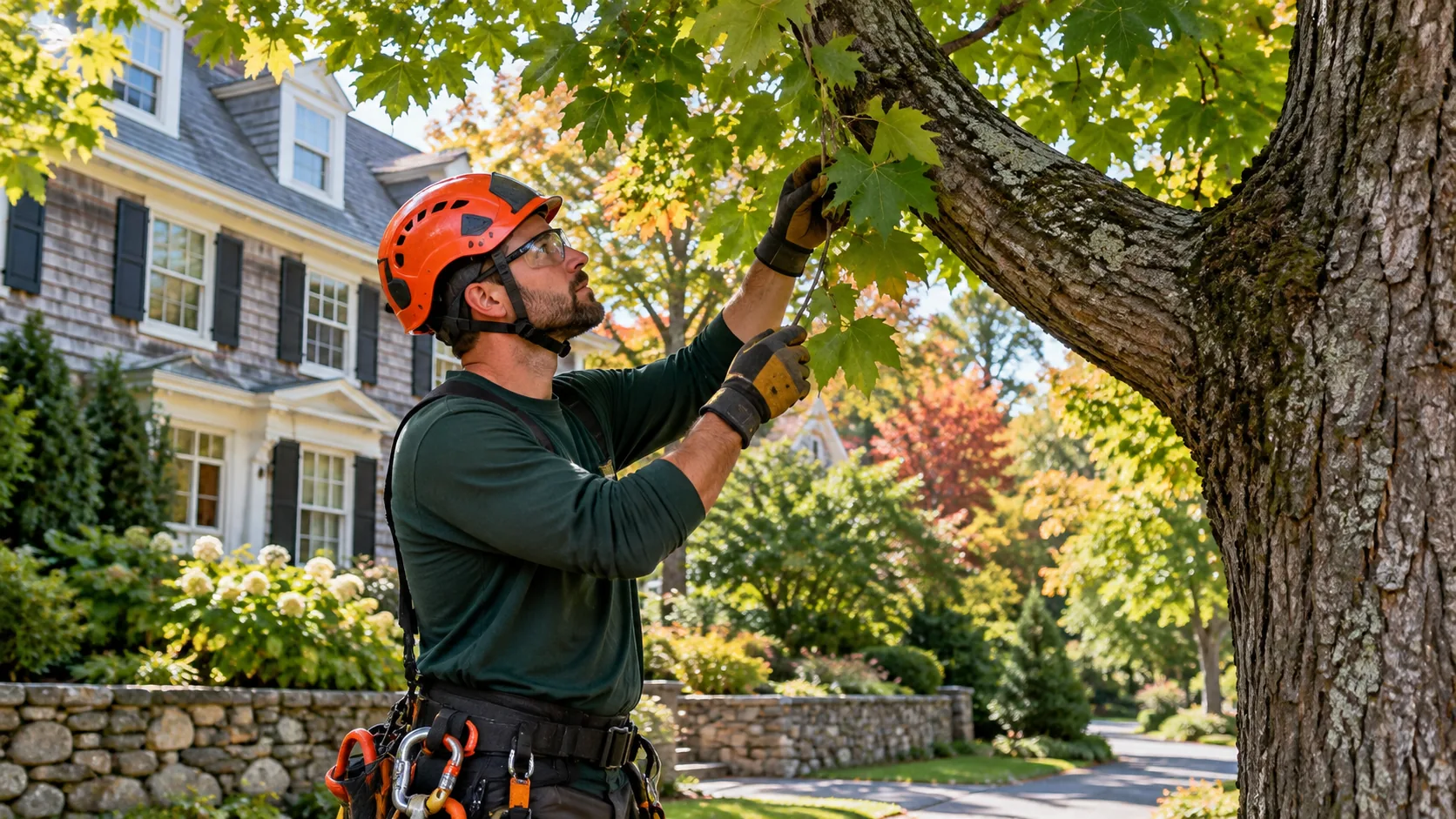
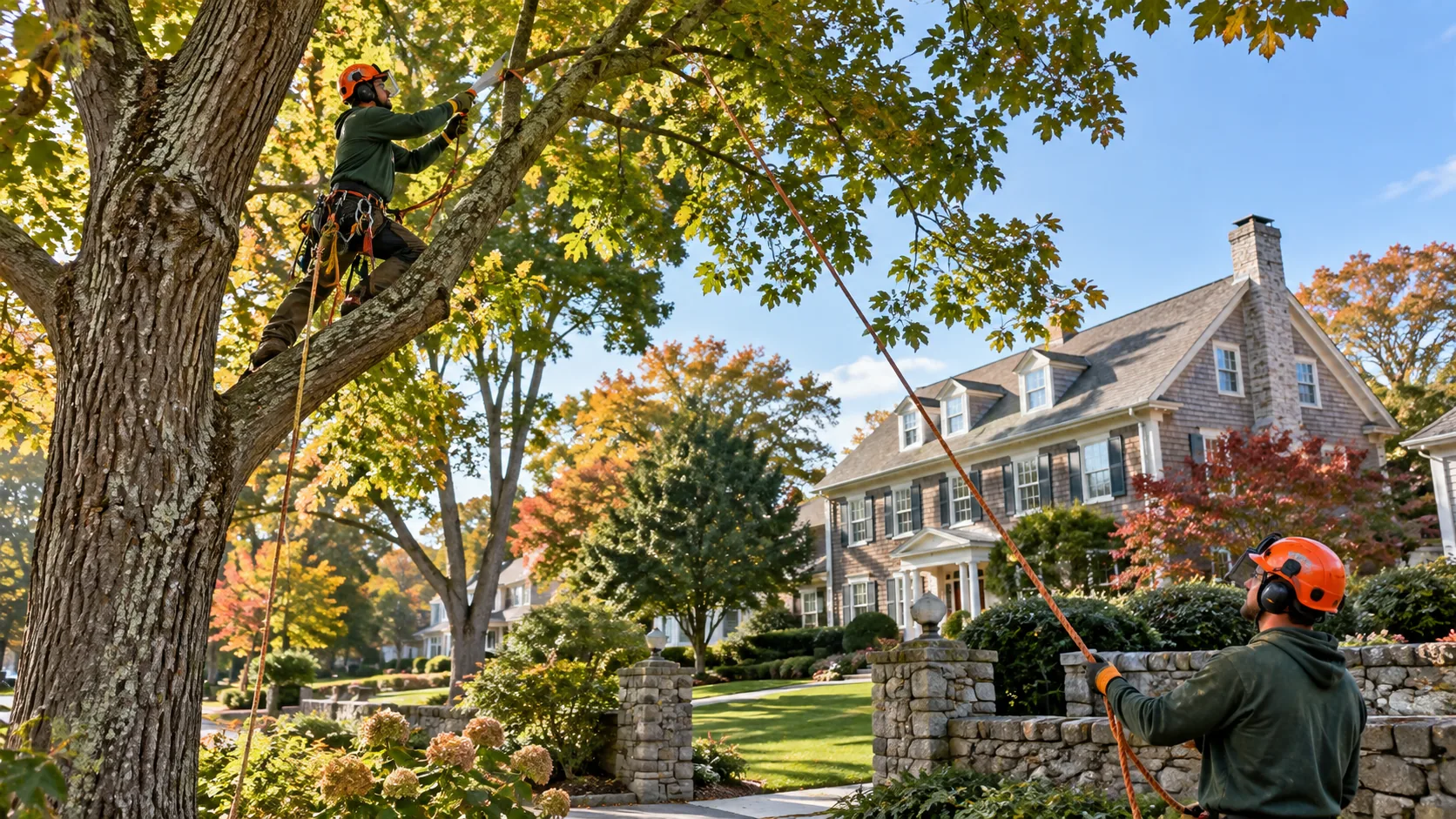
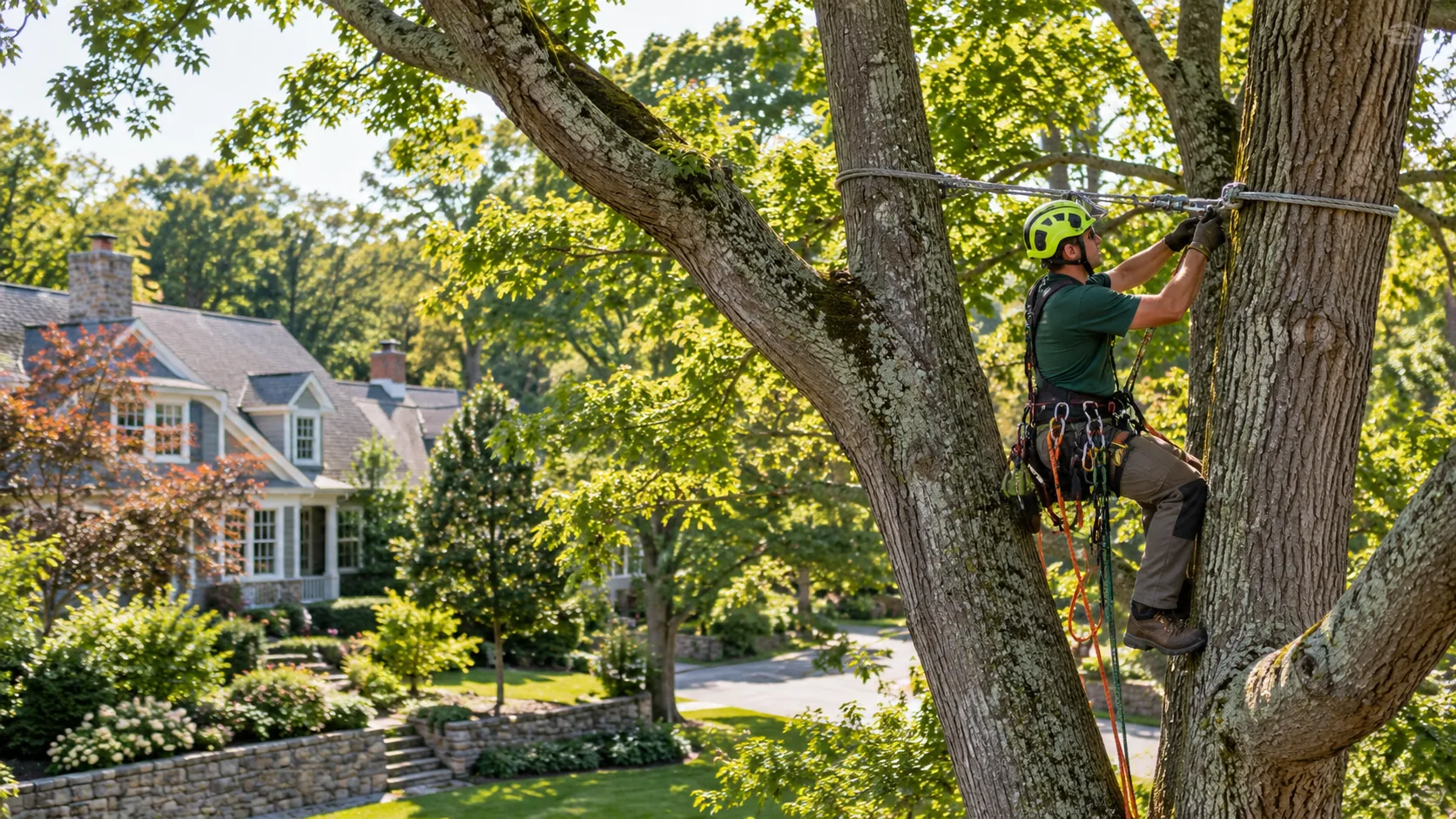
Diagnosis should combine symptoms with timing and site history. The same visual symptom can have several causes, so treatments should not be prescribed just from a photo. In Massachusetts, UMass Extension continues to track problems such as beech leaf disease, emerald ash borer, foliar diseases, and wood-decay fungi. Newton’s own street-tree inventory is dominated by maples, which makes maple health, structural pruning, and storm response especially relevant locally. Private properties also contain oaks, beeches, pines, ornamental trees, and many species not reflected by street-tree percentages.
The estimate should state the practical scope clearly enough that the homeowner can compare options. That includes what tree or trees are included, the type of work, cleanup, wood handling, stump work when relevant, and any assumptions about access. If conditions change once hidden decay, buried obstacles, or other unknowns are discovered, those changes should be explained rather than quietly folded into vague language.
Identify the species and document symptoms, location, and progression.
Inspect roots, trunk, scaffold unions, crown, soil, drainage, and recent site disturbances.
Separate likely abiotic stress from pest or disease patterns where possible.
Recommend monitoring, pruning, cultural changes, testing, treatment, or removal based on the evidence and tree value.
Set realistic expectations, because some problems can be managed while others are progressive or irreversible.
Every site is different. The sequence can change for utility conflicts, emergency conditions, municipal requirements, crane access, construction coordination, or other conditions that affect safety and scope.
Newton’s Tree Preservation Ordinance requires a permit before removal of private trees six inches DBH or larger. Exterior construction can also require a tree permit even when the project does not include tree removal. The City has separate construction, non-construction, and qualifying exemption processes, plus documentation and tree-protection requirements in certain situations.
That ordinance is most directly relevant to removal and construction, but it also affects broader tree-care planning. A pruning plan should not be used as a disguised removal. A construction project should protect trees that are supposed to remain. When a homeowner is deciding between preservation and removal, permit requirements can be part of the practical decision.
Read the Newton tree permit guide →The City reports more than 20,000 street trees and says maples account for about 80% of that public inventory. Many private properties contain additional mature hardwoods and ornamentals. The result is a market where mature-tree maintenance, storm response, and preservation decisions are not niche concerns.
Tree-health work can range from a basic inspection to ongoing treatment or monitoring. Cost depends on the number and size of trees, diagnostic complexity, climbing needs, laboratory testing when warranted, treatment method, product quantity, and how many visits are required. The right first step is diagnosis. Treating an assumed pest when the real problem is root damage or water stress wastes money and can delay the work the tree actually needs.
Height, trunk and branch diameter, species, condition, defects, lean, canopy spread, and the amount of material being handled.
Driveways, gates, slope, turf protection, walls, roofs, utilities, neighboring property, street access, parking, and room for equipment.
Rigging, climbing, bucket or crane use, cleanup, log handling, stump work, urgency, permits, and whether several tasks can be completed in one mobilization.
For broader budgeting guidance, see the Newton-area tree service cost guide. Typical ranges are planning tools, not guaranteed prices.
Careful removal planning for dead, declining, storm-damaged, crowded, or poorly placed trees on Newton properties.
Learn more →Related servicePruning for clearance, structure, safety, and long-term tree health across Newton’s mature residential canopy.
Learn more →Related servicePriority response for fallen trees, split limbs, blocked access, and storm-damaged trees where conditions allow safe work.
Learn more →Photos can help triage a problem, but a reliable diagnosis often requires seeing the tree, roots, site conditions, symptom pattern, and recent history.
Yes. UMass Extension continues to report beech leaf disease in Massachusetts and provides current guidance for landscape professionals.
Ash decline, canopy dieback, epicormic shoots, bark blonding from woodpeckers, and D-shaped exit holes can be associated with emerald ash borer, but species confirmation and inspection matter.
No. Some need pruning or site changes, some should be monitored, and some may be too structurally compromised or too advanced in decline for treatment to be sensible.
Get a site-specific estimate instead of relying on a generic range.