
Confirm the tree, goals, and site constraints
Confirm the tree, goals, and site constraints.
Careful removal planning for dead, declining, storm-damaged, crowded, or poorly placed trees on Newton properties.
Tree removal in Newton is often less about simply cutting a trunk and more about managing space, structures, neighbors, access, and local tree rules. Mature trees can overhang roofs, garages, stone walls, driveways, gardens, and neighboring property. A good removal plan accounts for where every section can safely travel, what equipment can reach the work zone, and what cleanup or stump work is needed afterward.
Newton properties often combine mature trees with finished landscaping, roofs, garages, utility lines, stone walls, narrow drives, and neighboring yards. Those details affect how the work can be performed and whether the best recommendation is immediate work, phased work, monitoring, or a different service entirely.
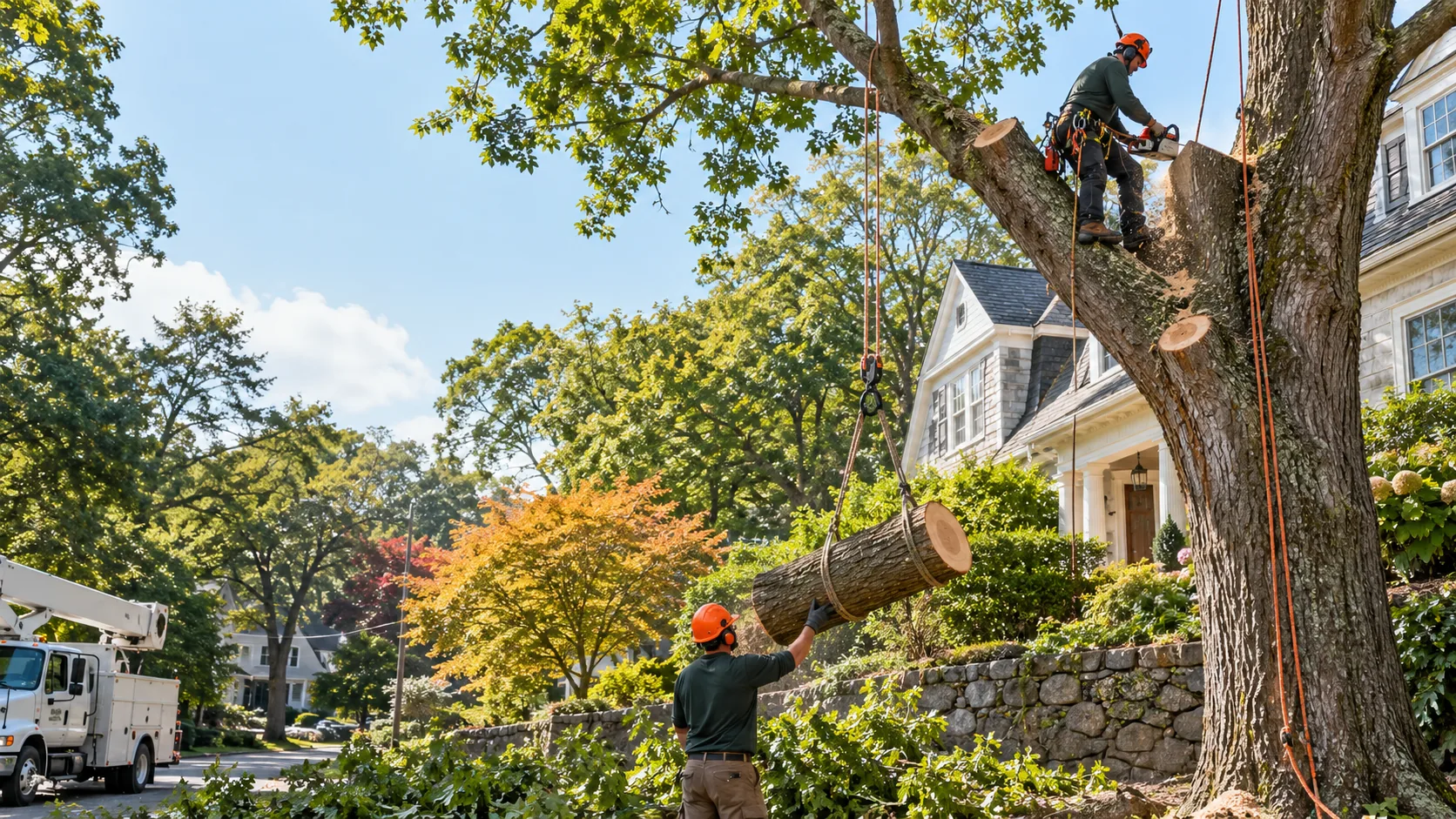
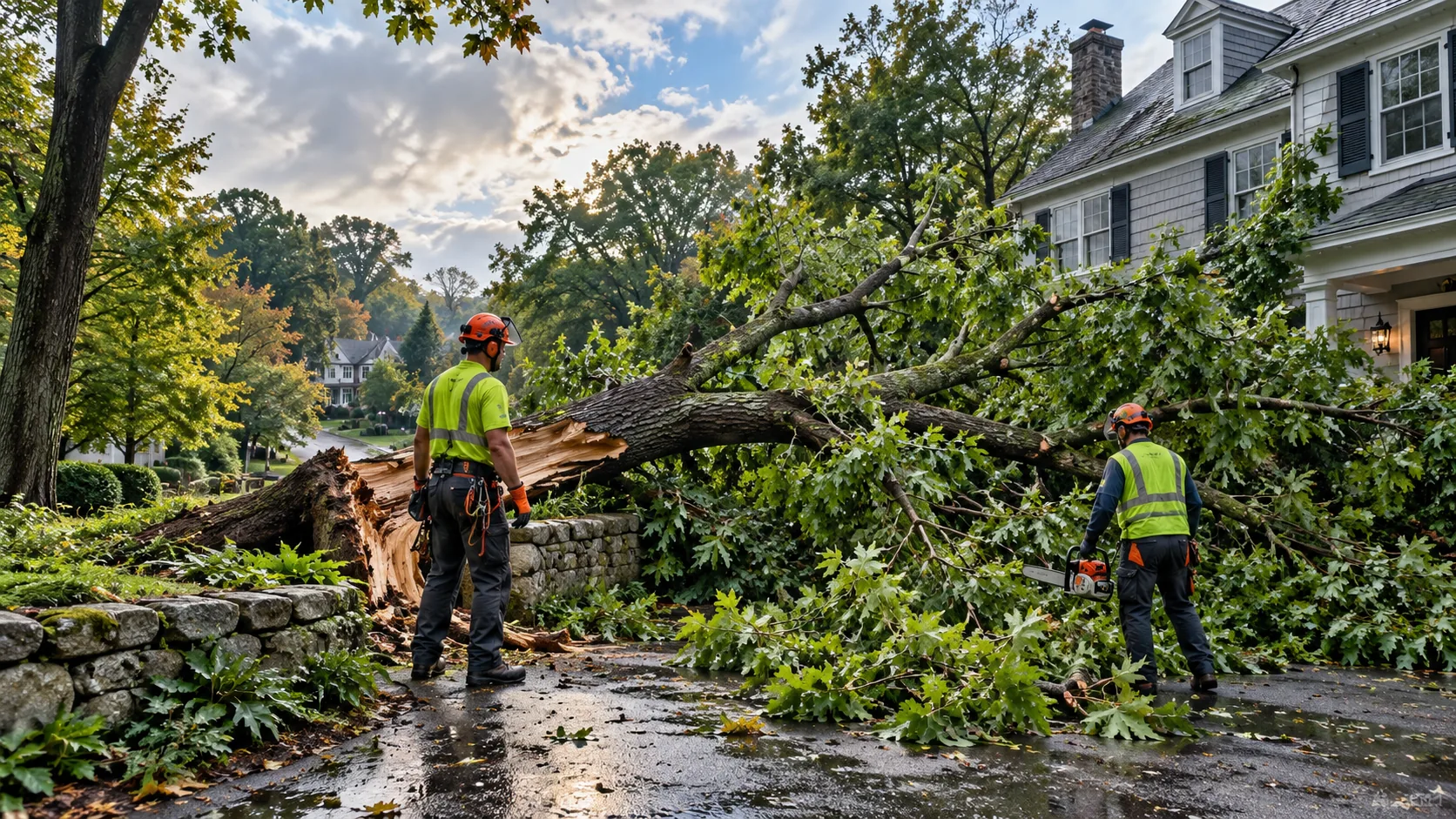
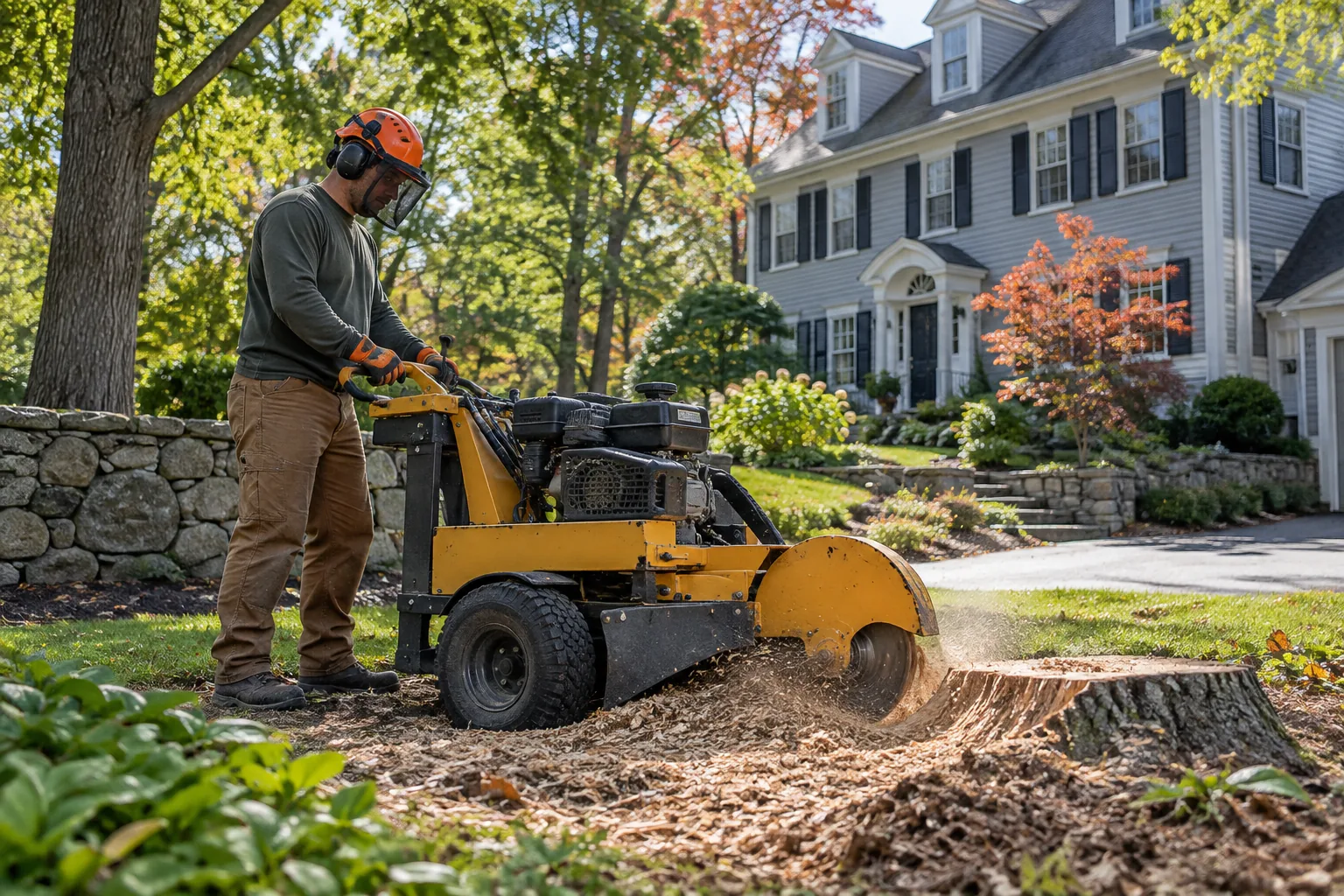
Before removal, the work zone should be evaluated from the canopy all the way to the street. Important factors include tree height and spread, lean, decay, nearby structures, overhead lines, fences, patios, retaining walls, planting beds, driveway width, slope, room for a chipper or truck, and whether a crane or compact equipment may be appropriate. In Newton, the permit question belongs near the beginning of that conversation rather than at the end. The City regulates removal of private trees at six inches DBH and larger, and exterior construction can trigger tree-permit requirements even when no tree is being removed.
The estimate should state the practical scope clearly enough that the homeowner can compare options. That includes what tree or trees are included, the type of work, cleanup, wood handling, stump work when relevant, and any assumptions about access. If conditions change once hidden decay, buried obstacles, or other unknowns are discovered, those changes should be explained rather than quietly folded into vague language.
Confirm the tree, goals, and site constraints.
Review access, rigging zones, drop zones, neighboring property, and utility concerns.
Identify likely permit or arborist-documentation needs before scheduling regulated work.
Choose a removal method, such as sectional dismantling, controlled rigging, bucket access, or crane-assisted work when justified.
Process brush and wood, complete agreed cleanup, and grind the stump when included in scope.
Every site is different. The sequence can change for utility conflicts, emergency conditions, municipal requirements, crane access, construction coordination, or other conditions that affect safety and scope.
Newton’s Tree Preservation Ordinance requires a permit before removal of private trees six inches DBH or larger. Exterior construction can also require a tree permit even when the project does not include tree removal. The City has separate construction, non-construction, and qualifying exemption processes, plus documentation and tree-protection requirements in certain situations.
That ordinance is most directly relevant to removal and construction, but it also affects broader tree-care planning. A pruning plan should not be used as a disguised removal. A construction project should protect trees that are supposed to remain. When a homeowner is deciding between preservation and removal, permit requirements can be part of the practical decision.
Read the Newton tree permit guide →The City reports more than 20,000 street trees and says maples account for about 80% of that public inventory. Many private properties contain additional mature hardwoods and ornamentals. The result is a market where mature-tree maintenance, storm response, and preservation decisions are not niche concerns.
Removal price is driven primarily by size, condition, access, rigging complexity, proximity to structures, equipment needs, debris volume, and urgency. A typical Boston-area range places many full removals in a broad planning range from a few hundred dollars into the low thousands, with unusually large or technically difficult trees costing more. Newton properties can add cost when work must be pieced down carefully over roofs, gardens, walls, or narrow driveways. Any permit fees, replacement-tree obligations, or arborist documentation required by the City are separate planning considerations.
Height, trunk and branch diameter, species, condition, defects, lean, canopy spread, and the amount of material being handled.
Driveways, gates, slope, turf protection, walls, roofs, utilities, neighboring property, street access, parking, and room for equipment.
Rigging, climbing, bucket or crane use, cleanup, log handling, stump work, urgency, permits, and whether several tasks can be completed in one mobilization.
For broader budgeting guidance, see the Newton-area tree service cost guide. Typical ranges are planning tools, not guaranteed prices.
Pruning for clearance, structure, safety, and long-term tree health across Newton’s mature residential canopy.
Learn more →Related servicePriority response for fallen trees, split limbs, blocked access, and storm-damaged trees where conditions allow safe work.
Learn more →Related serviceMechanical stump grinding for old removals, trip hazards, replanting plans, and yards that need a cleaner finish.
Learn more →Often, yes. Newton requires a permit before removing private trees six inches DBH or larger, with different application paths depending on construction, property type, and tree size. Check the current City requirements before work begins.
Yes. Sectional removal with climbing, rigging, a bucket, or other equipment is common when there is not a clear open drop zone.
It can be included, but it should be confirmed in the estimate. Tree removal and stump grinding are separate operations with different equipment and cleanup choices.
Scope can include chipping brush, hauling logs, leaving firewood-length pieces, or other arrangements depending on access and customer preference.
Get a site-specific estimate instead of relying on a generic range.