
Inspect the tree and identify the structural concern and targets beneath it
Inspect the tree and identify the structural concern and targets beneath it.
Supplemental support systems for selected trees with structural unions or limbs that warrant professional evaluation.
Cabling and bracing are not generic upgrades for every mature tree. They are supplemental support systems used in selected situations where a valuable tree has a structural weakness that may benefit from added restraint. Common examples include certain codominant stems, long heavy limbs, or unions with a history or pattern that raises concern. The tree still needs enough vitality and sound structure for support to make sense.
Newton properties often combine mature trees with finished landscaping, roofs, garages, utility lines, stone walls, narrow drives, and neighboring yards. Those details affect how the work can be performed and whether the best recommendation is immediate work, phased work, monitoring, or a different service entirely.
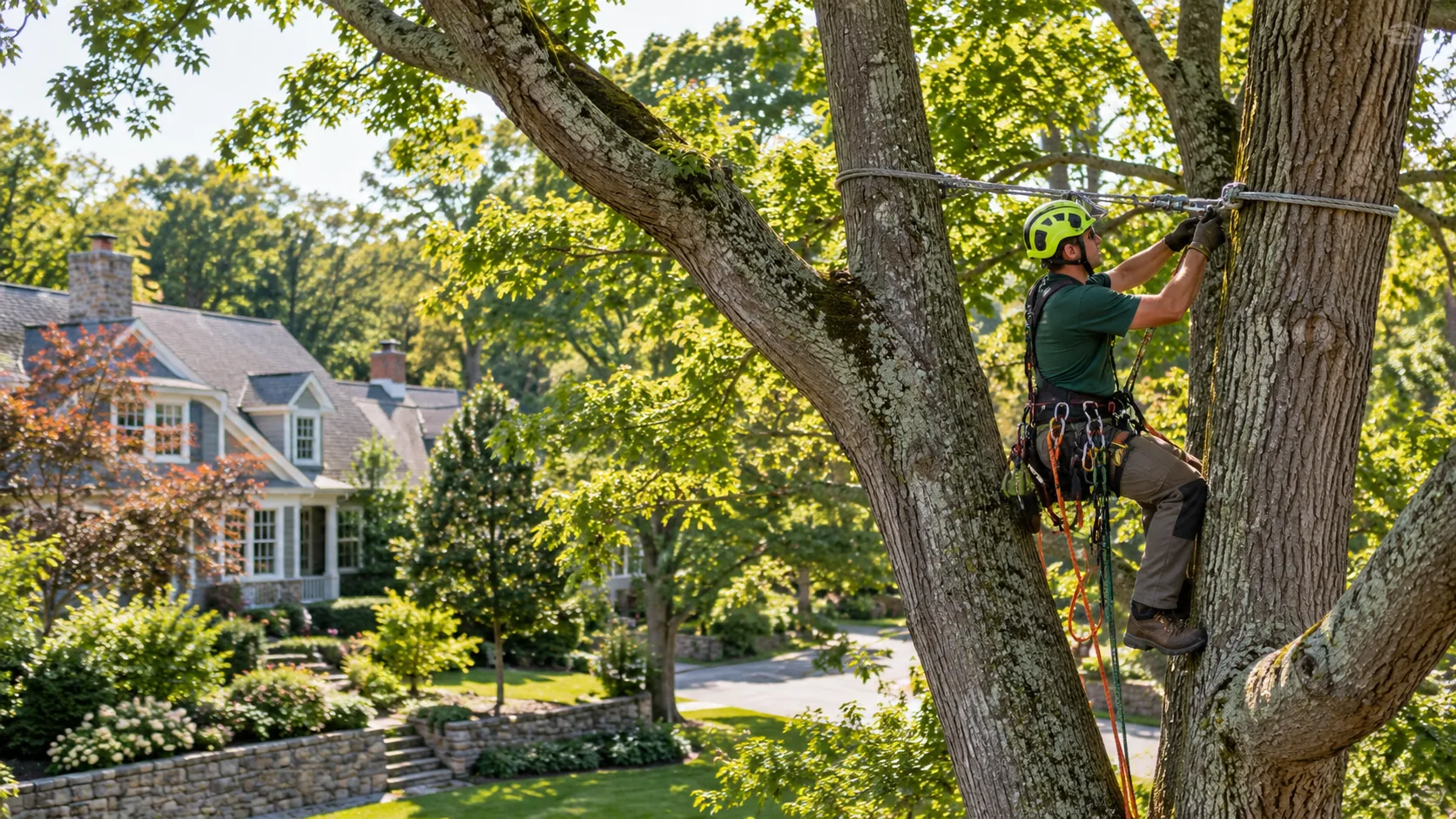
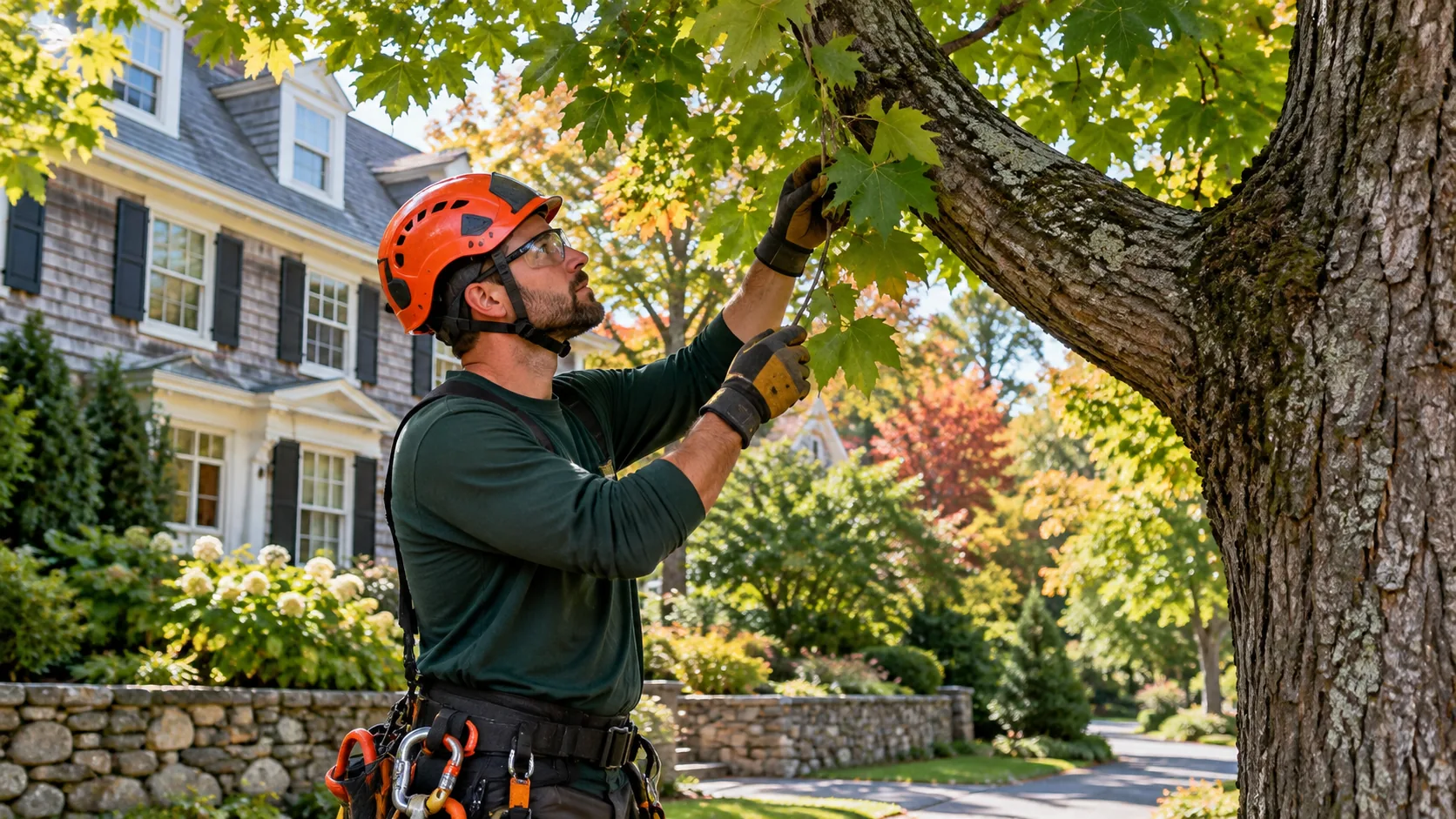
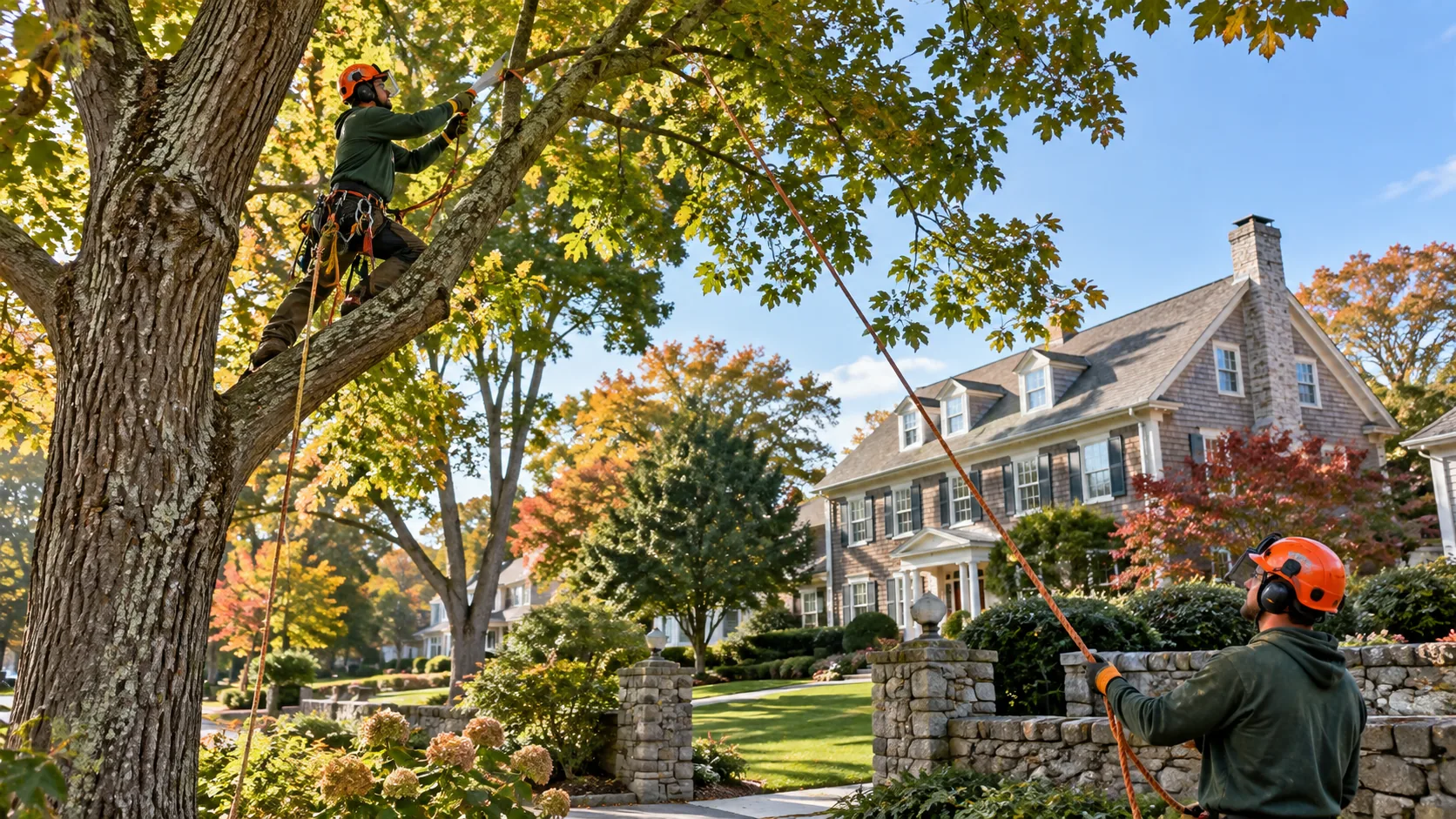
Support hardware should follow an inspection, not replace one. The evaluator needs to consider species, tree vitality, decay, cavities, included bark, union geometry, limb loading, root condition, target occupancy, and whether pruning can reduce loads first. Cables are generally installed high in the canopy to limit movement between stems or limbs. Bracing rods may be used in some unions. Neither system makes a tree fail-proof, and both require periodic inspection because trees grow and hardware can loosen, become engulfed, or outlive its intended service condition.
The estimate should state the practical scope clearly enough that the homeowner can compare options. That includes what tree or trees are included, the type of work, cleanup, wood handling, stump work when relevant, and any assumptions about access. If conditions change once hidden decay, buried obstacles, or other unknowns are discovered, those changes should be explained rather than quietly folded into vague language.
Inspect the tree and identify the structural concern and targets beneath it.
Determine whether pruning, monitoring, support, removal, or a combination is appropriate.
Specify support type, placement, hardware, and installation points.
Install with climbing and rigging methods that avoid unnecessary injury to the tree.
Document the system and establish an inspection interval so the hardware is not forgotten.
Every site is different. The sequence can change for utility conflicts, emergency conditions, municipal requirements, crane access, construction coordination, or other conditions that affect safety and scope.
Newton’s Tree Preservation Ordinance requires a permit before removal of private trees six inches DBH or larger. Exterior construction can also require a tree permit even when the project does not include tree removal. The City has separate construction, non-construction, and qualifying exemption processes, plus documentation and tree-protection requirements in certain situations.
That ordinance is most directly relevant to removal and construction, but it also affects broader tree-care planning. A pruning plan should not be used as a disguised removal. A construction project should protect trees that are supposed to remain. When a homeowner is deciding between preservation and removal, permit requirements can be part of the practical decision.
Read the Newton tree permit guide →The City reports more than 20,000 street trees and says maples account for about 80% of that public inventory. Many private properties contain additional mature hardwoods and ornamentals. The result is a market where mature-tree maintenance, storm response, and preservation decisions are not niche concerns.
Cabling and bracing costs vary more with access and system design than with a simple per-tree rate. A single cable in a readily climbed tree is different from a multi-stem specimen requiring several support points, substantial pruning, or complex access. The estimate should distinguish the support hardware, pruning, inspection, and any future monitoring. Because the system remains in a living tree, the long-term maintenance obligation matters as much as initial installation price.
Height, trunk and branch diameter, species, condition, defects, lean, canopy spread, and the amount of material being handled.
Driveways, gates, slope, turf protection, walls, roofs, utilities, neighboring property, street access, parking, and room for equipment.
Rigging, climbing, bucket or crane use, cleanup, log handling, stump work, urgency, permits, and whether several tasks can be completed in one mobilization.
For broader budgeting guidance, see the Newton-area tree service cost guide. Typical ranges are planning tools, not guaranteed prices.
Careful removal planning for dead, declining, storm-damaged, crowded, or poorly placed trees on Newton properties.
Learn more →Related servicePruning for clearance, structure, safety, and long-term tree health across Newton’s mature residential canopy.
Learn more →Related servicePriority response for fallen trees, split limbs, blocked access, and storm-damaged trees where conditions allow safe work.
Learn more →No. Cabling can reduce movement or redistribute load in selected situations, but it cannot eliminate all risk from a living tree.
Often. Selective pruning may reduce weight or leverage and can be part of the support plan.
That depends on the system, tree growth, installation, and conditions. Support systems should be inspected periodically rather than assumed permanent and maintenance-free.
No. Some defects, decay, root failures, or active splits make support inappropriate. A structural assessment should come first.
Get a site-specific estimate instead of relying on a generic range.