
Broken scaffold limbs
Large limbs can tear at unions and remain partly attached, placing unpredictable loads on the remaining wood.
A practical guide to immediate hazards, professional cleanup, and deciding whether a damaged tree can remain.
After wind, heavy snow, or ice, the most dramatic-looking damage is not always the most dangerous. A large branch lying flat on the lawn may be less urgent than a smaller limb suspended above a walkway. A tree that has shifted at the roots can be more unstable than one with visible branch breakage.
The first goal is site control: keep people away, identify electrical or structural hazards, and avoid creating new risk while trying to clean up quickly.
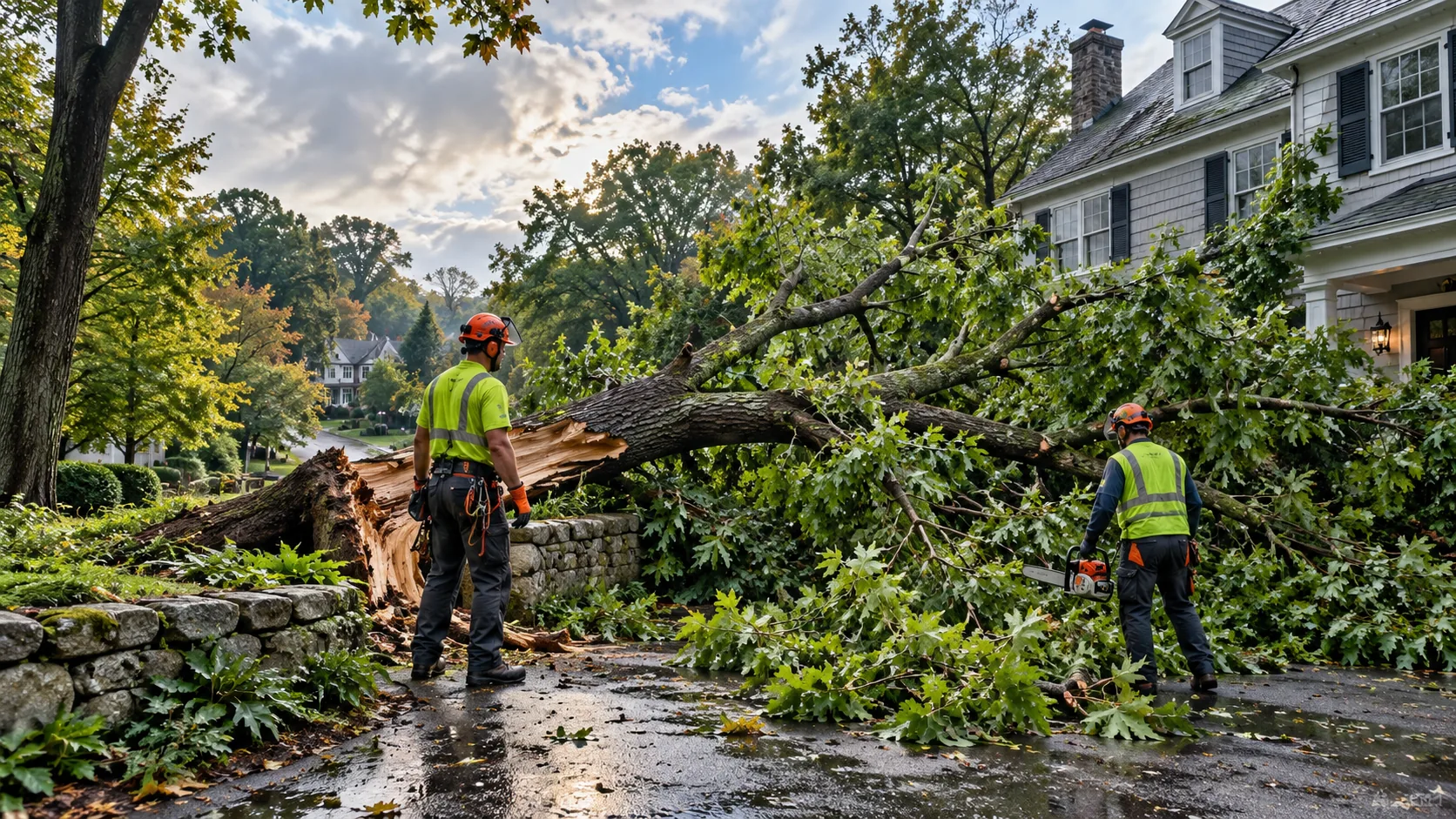
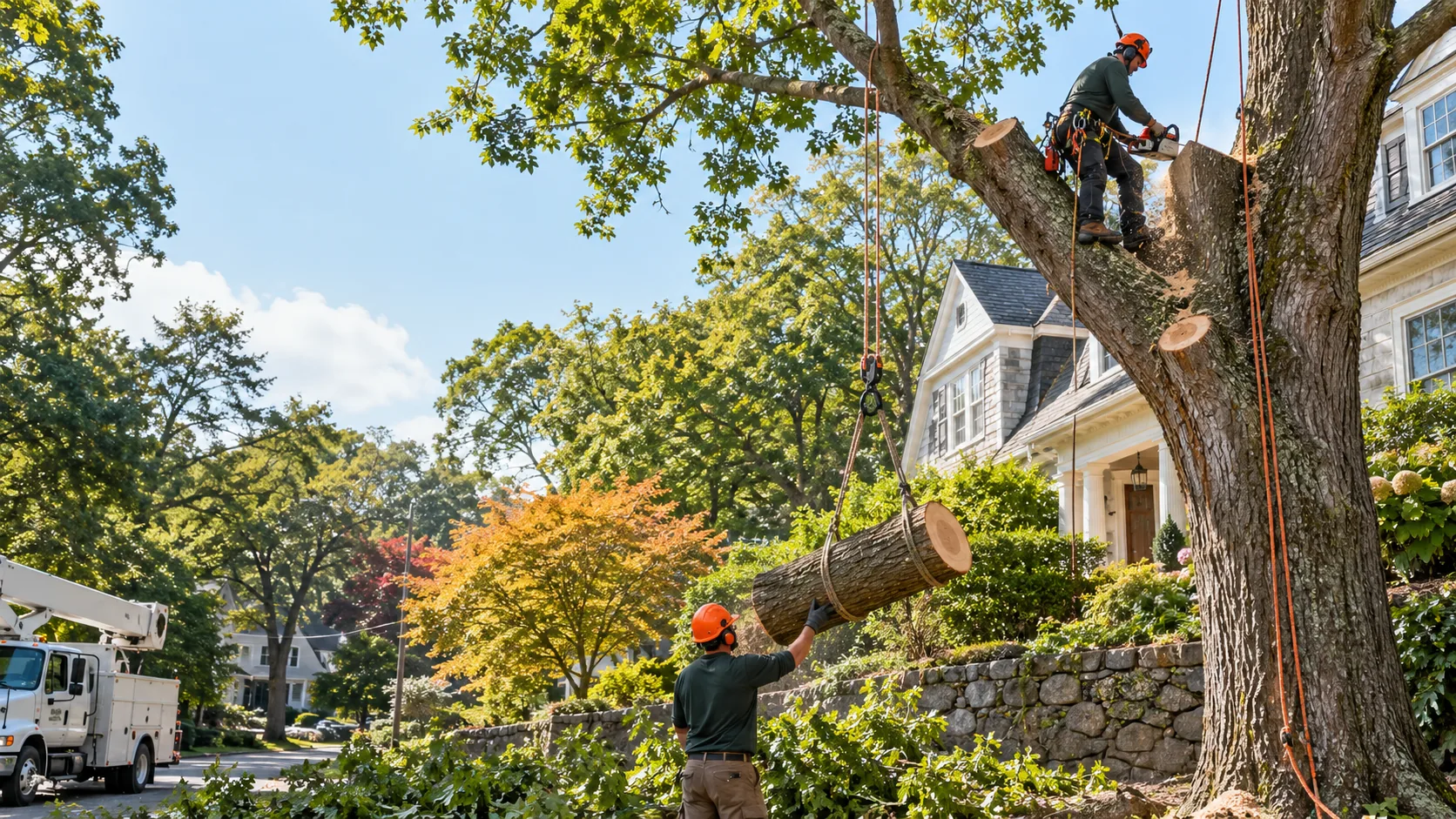
Large limbs can tear at unions and remain partly attached, placing unpredictable loads on the remaining wood.
Codominant stems may separate during wind or snow loading. Some defects can be stabilized temporarily; others require removal.
Uprooting or newly exposed roots indicate loss of anchorage. A suddenly leaning tree should be treated as a serious concern.
A failed tree can lodge in another tree or structure, storing energy and making ordinary cutting extremely hazardous.
Do not work under suspended limbs, stand on a loaded trunk, climb a storm-damaged tree without appropriate training, or cut wood that is bent and storing energy unless you understand how it will move. Do not assume a wire is safe because it is not sparking. Do not pull a lodged tree with a vehicle or rope from an improvised anchor point.
Safe cleanup begins after the scene is stable enough to evaluate. Professional crews use controlled access, rigging, mechanical advantage, buckets, cranes, loaders, or other methods depending on what is loaded and where it can move.
Not every storm-damaged tree needs to be removed. A tree may be retained if root anchorage is sound, the trunk and major unions remain viable, enough healthy canopy remains, and defects can be managed with proper pruning or support. Removal becomes more likely when there is major root failure, extensive trunk splitting, severe decay, catastrophic crown loss, or a location where residual risk cannot be reduced to a reasonable level.
For trees that remain, follow-up monitoring matters. Storm damage can expose decay, change load distribution, or lead to new sprouting that needs future management.
Take safe-distance photos before debris is moved when possible. Coverage varies by policy and by whether a tree damaged a covered structure or simply fell in the yard. Contact the insurer for policy-specific guidance.
Once the fallen wood and urgent hazards are handled, inspect the rest of the property rather than assuming the storm is finished. Adjacent trees may have fresh cracks, broken hangers, newly exposed roots, or shifted load that was not obvious during the first response. Trees that lost substantial canopy may need later structural pruning, while damaged soil and root zones may need protection from vehicles and repair work.
Keep the first emergency scope separate from follow-up recommendations when possible. That makes it easier to understand what had to be done immediately, what can be scheduled under normal conditions, and what should simply be monitored.
Newton’s mature canopy, residential density, stone walls, utility infrastructure, and closely spaced homes can make storm work especially dependent on controlled rigging and access. If a damaged tree also needs full removal, the City’s private-tree ordinance may be relevant. Emergency circumstances can affect process, but homeowners should still confirm current municipal requirements rather than assuming storm damage automatically removes all permit obligations.
When the immediate hazard is controlled, ask for a written scope that separates urgent stabilization from follow-up removal, pruning, stump grinding, or health assessment.
Keep people away from the tree, hanging limbs, damaged structures, and any downed or low electrical conductors. Call the utility or emergency authorities when electrical hazards are involved.
Sometimes, but not every split is repairable. Root stability, trunk damage, union geometry, decay, remaining crown, and the target beneath the tree all matter.
Coverage varies by policy and circumstances, especially based on what the tree damaged. Document conditions safely and contact your insurer.
If there is no immediate hazard, blocked critical access, utility involvement, or structural emergency, scheduled daylight work may be safer and more efficient than rushing into unstable conditions at night.
Include the property address, the service you need, what the tree is close to, and any access or storm-damage details that may affect the work.